

> LIFE Charcos completed the surveys for the biodiversity of temporary ponds by compiling all the ecological information, current and historical, establishing the reference situation for the ponds of southwest coast.
It was completed the assessment phase to stablish the reference state of the conservation status of temporary ponds which allows to incorporate scientific knowledge on the ecological information in this habitat at the Site of Community Importance of the Southwest Coast.
To carry out this task, in addition to the compilation of more than 700 references on the scientific knowledge of this habitat (available here), the biologists teams from University of Évora, University of Algarve and LPN visited regularly over 2 years 89 ponds where a register was carry out of the present species of flora and fauna of various groups, such as freshwater crustaceans (large branchiopods), amphibians, reptiles, Micromammals, bats and birds.
The results of these surveys, as well as allow it to establish the baseline, reinforce and extend the knowledge that previously existed on this priority conservation habitat.

Caropsis-verticillato-inundata
With regard to freshwater crustaceans, the large branchiopods, the temporary ponds in the Southwest Coast are home to six species, which represent 50% of the total species that occur in temporary wetlands in Portugal mainland. In some ponds it was possible to find simultaneously four of these six species. The acquired knowledge also indicates an increase in the number of ponds where there are two species of fairy-shrimp (Branchipus Cortesi and Tanymastix stagnalis). Note also the conservation value of the tadpole-shrimp (Triops vicentinus), endemic to the Southwest of Portugal, whose gender (Triops) is considered a living fossil, of which there are fossils with 180 million years.

Tadpole shrimp (Triops vicentinus)
It was also recorded in these 89 ponds the presence of 13 species of amphibians. The most common in these southwestern ponds are: Iberian Spadefoot Toad (Pelobates cultripes), Iberian Ribbed Newt (Pleurodeles waltl), Mediterranean Tree Frog (Hyla meridionalis), Common Parsley Frog (Pelodytes punctatus), Iberian Painted Frog (Discoglossus galganoi) and Southern Marbled Newt (Triturus pygmaeus). In general it was found that ponds of larger dimensions and with a greater variety of micro-habitats harboring richer amphibians.

Iberian Spadefoot Toad (Pelobates cultripes)
The group of Micromammals that were evaluated, which include the Cabrera's Vole (Microtus cabrerae) and Southwestern water vole (Arvicola sapidus), it was found that the complexes of the most important ponds for these species are located in the region Vila Nova de Milfontes, Odemira. Here a large number of ponds has one or two species. It was highlighted that the larger ponds are very important because they provide greater area of habitat for these species. The results have increased the known distribution area for Cabrera's Vole at about 30 km towards south.
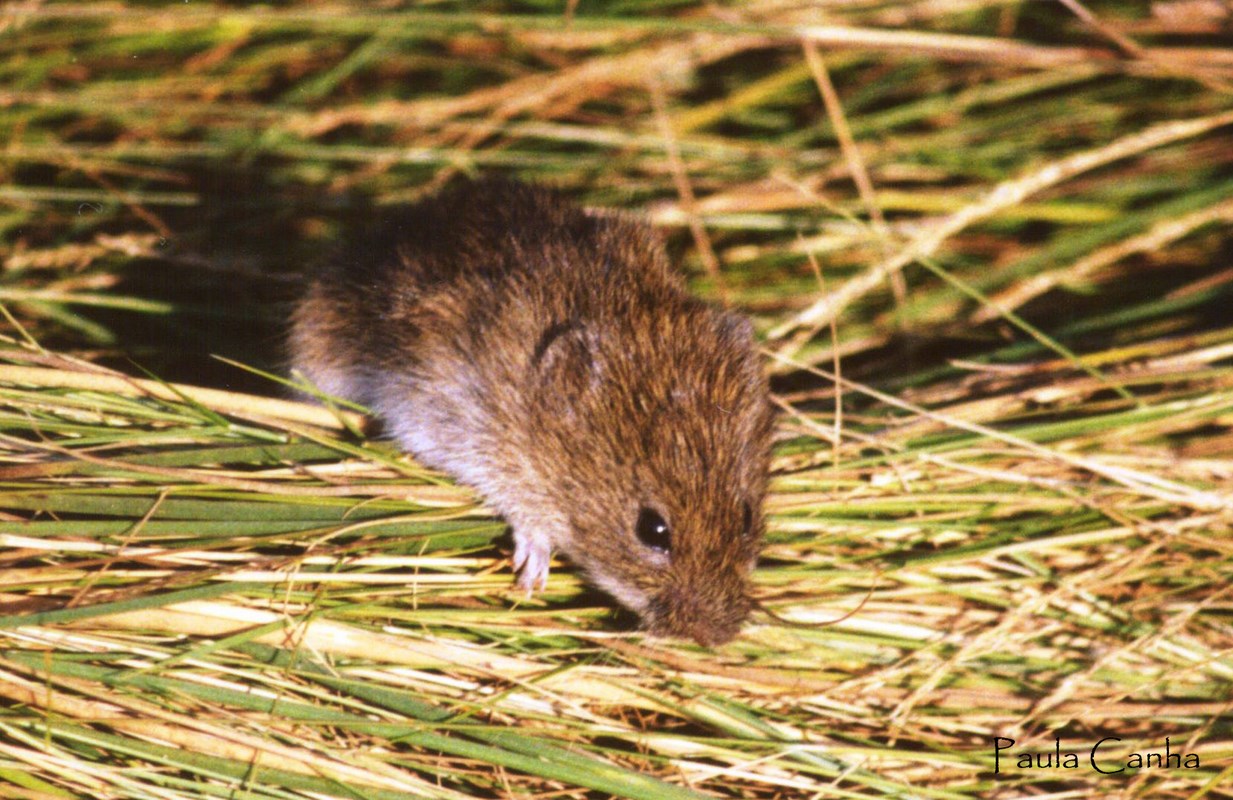
Cabrera's Vole (Microtus cabrerae)
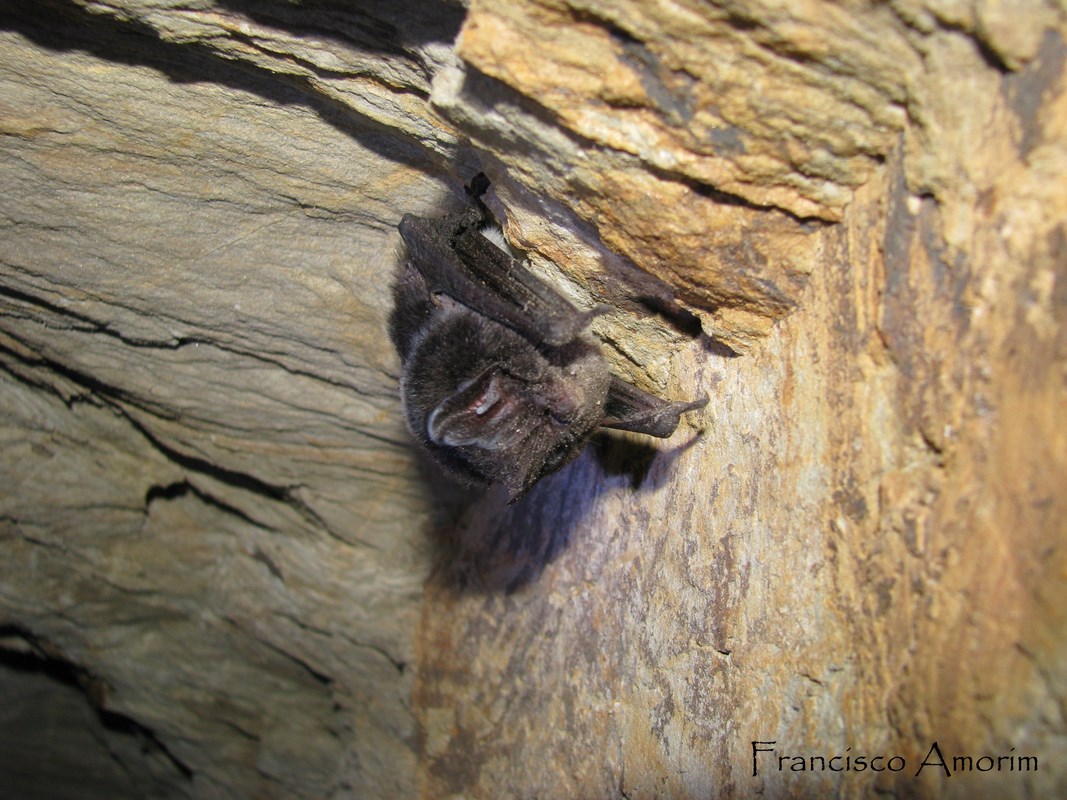
Western Barbastelle (Barbastella barbastellus)
In this action it was also found that the overall analysis of indicators collected for water quality confirms the relationship between a good water quality and the presence of greater biodiversity.
The results obtained underlined the importance of Mediterranean Temporary Ponds, not only by the high species richness as well as the occurrence of unique species. Thus, in a constantly changing landscape, these habitats that are still present are authentic treasures that must be preserved.
This project intends to establish criteria for assessing the condition of the temporary ponds in order to create an index to evaluate its condition, and set guidelines for its management. To accomplish the goals it sets itself, the project team is working closely with the owners and other users of the territory.
