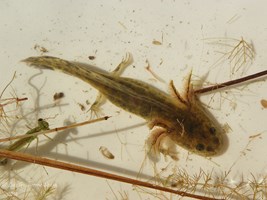
> Frogs, toads, salamanders and newts were the main atraction in "Save the Frog Day" celebrations with the LIFE Charcos Project
"SAVE THE FROGS DAY" is an event organized worldwide for the conservation of amphibians. The mission is to protect amphibian populations, which play an important role in the ecosystem, such as controlling insects that can act as pests. The management of this organization is based in California, United States of America, but works around the world to avoid the extinction of amphibians. Since 2008, this organization has promoted environmental education activities with the help of scientists and volunteers, and more than 1400 events have been organized in 59 countries to educate society to protect amphibians.
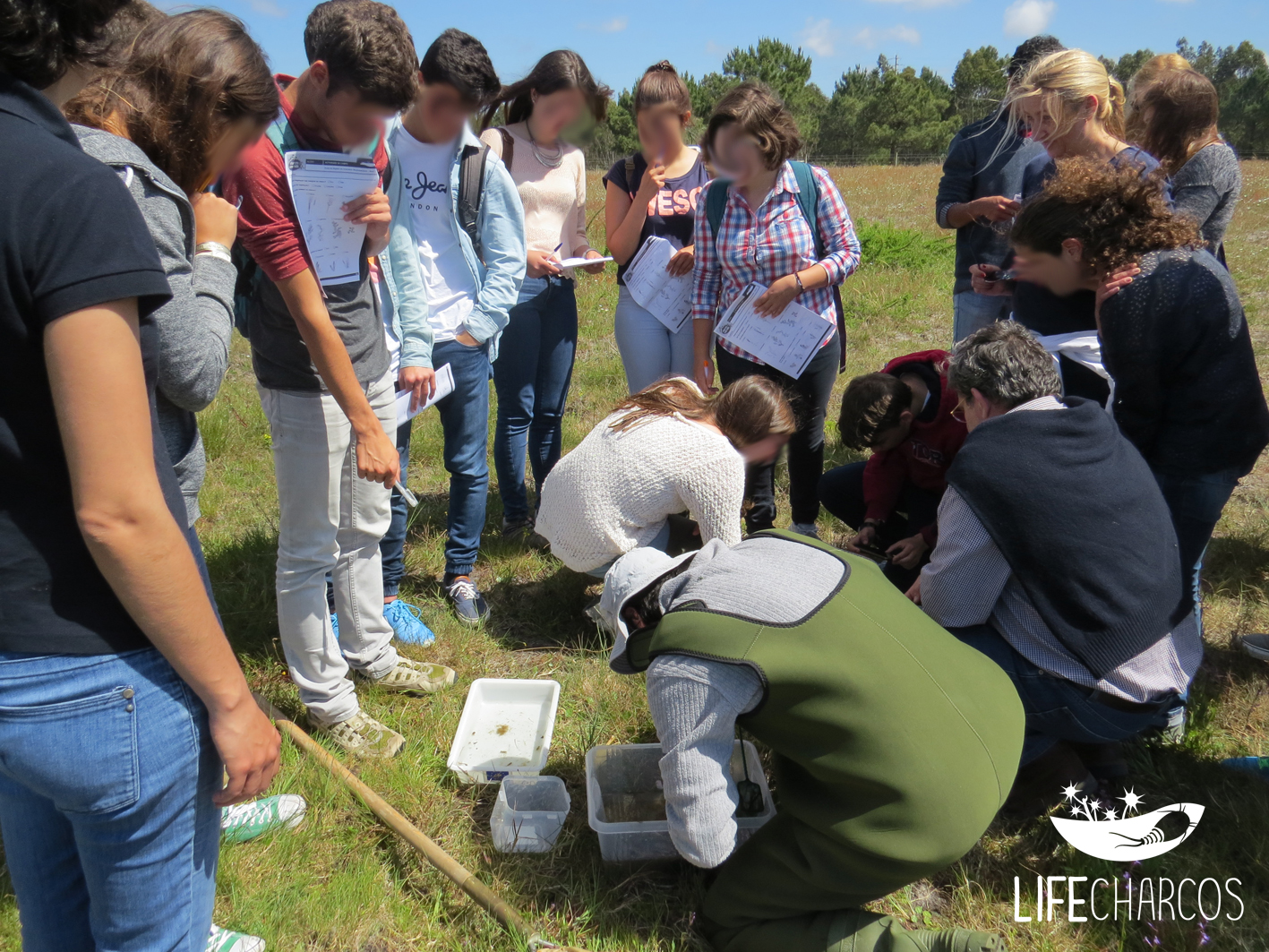
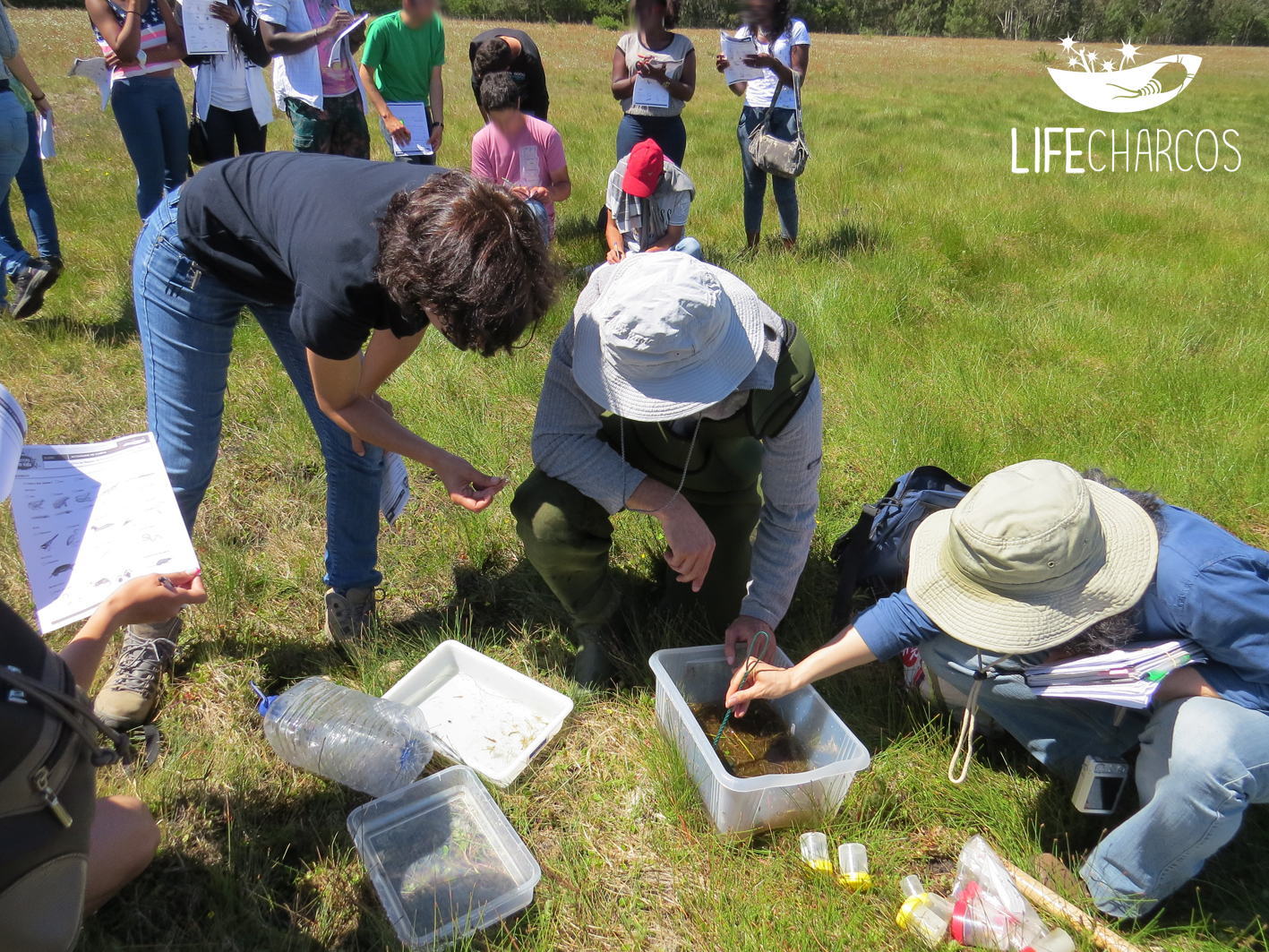
In this context, the LIFE Charcos Project has stimulated several field trips in 2015 with schools in the municipality of Odemira to the Mediterranean Temporary Ponds in this region in order to educate students about the importance of this habitat for the species of amphibians present.
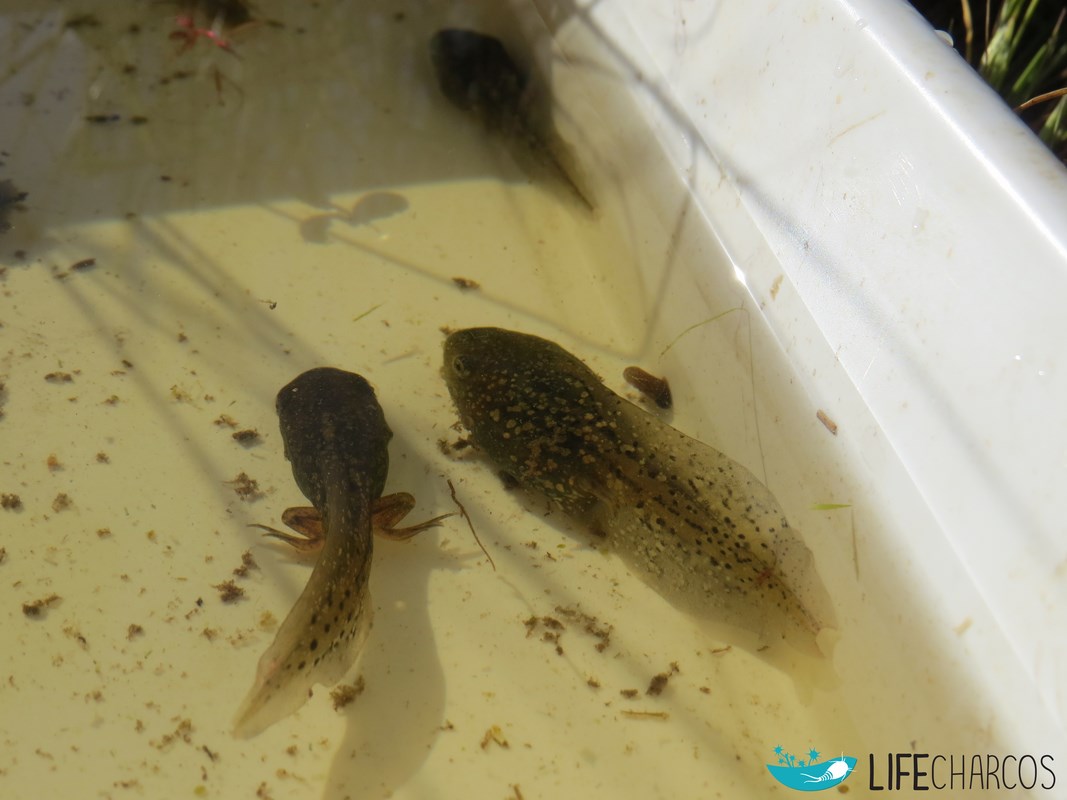
Amphibians, which include frogs, toads, salamanders, and newts, have in their life cycle an aquatic phase and a terrestrial phase. In the aquatic phase the adults put their eggs in the water, which germinate to a larval stage that we know as tadpoles. Tadpoles remain for a few days or weeks in the water, breathing through fishlike gills, until the metamorphosis is complete and they become ready for the terrestrial phase in which they can breathe out of water.
Temporary ponds are one of the most important habitats for the reproduction of amphibians, since they only have water in the winter and spring, which coincides with the breeding season of amphibians. As well as it does not have as many predators as rivers and streams, especially fish or crayfish. In this way, small tadpoles are more likely to survive.